
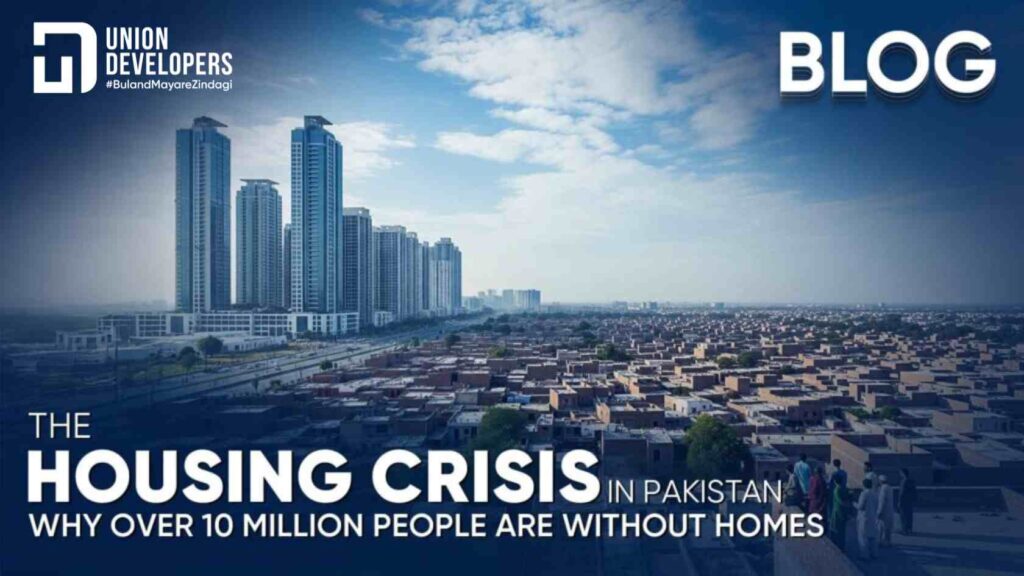
Pakistan’s housing crisis is no longer a background issue. It is a structural fault line shaping urban life, limiting affordability, and quietly widening social inequality.
By 2026, Pakistan might face a shortage of 12-13 million housing units. Cities are growing faster than housing can keep up, the system for getting home loans is weak and construction costs are very expensive.
The gap is not an abstract problem. It is lived daily in rising rents, shrinking space, longer commutes, and the psychological weight of “never quite enough”.
Housing Market Snapshot: A System Built on a Permanent Deficit
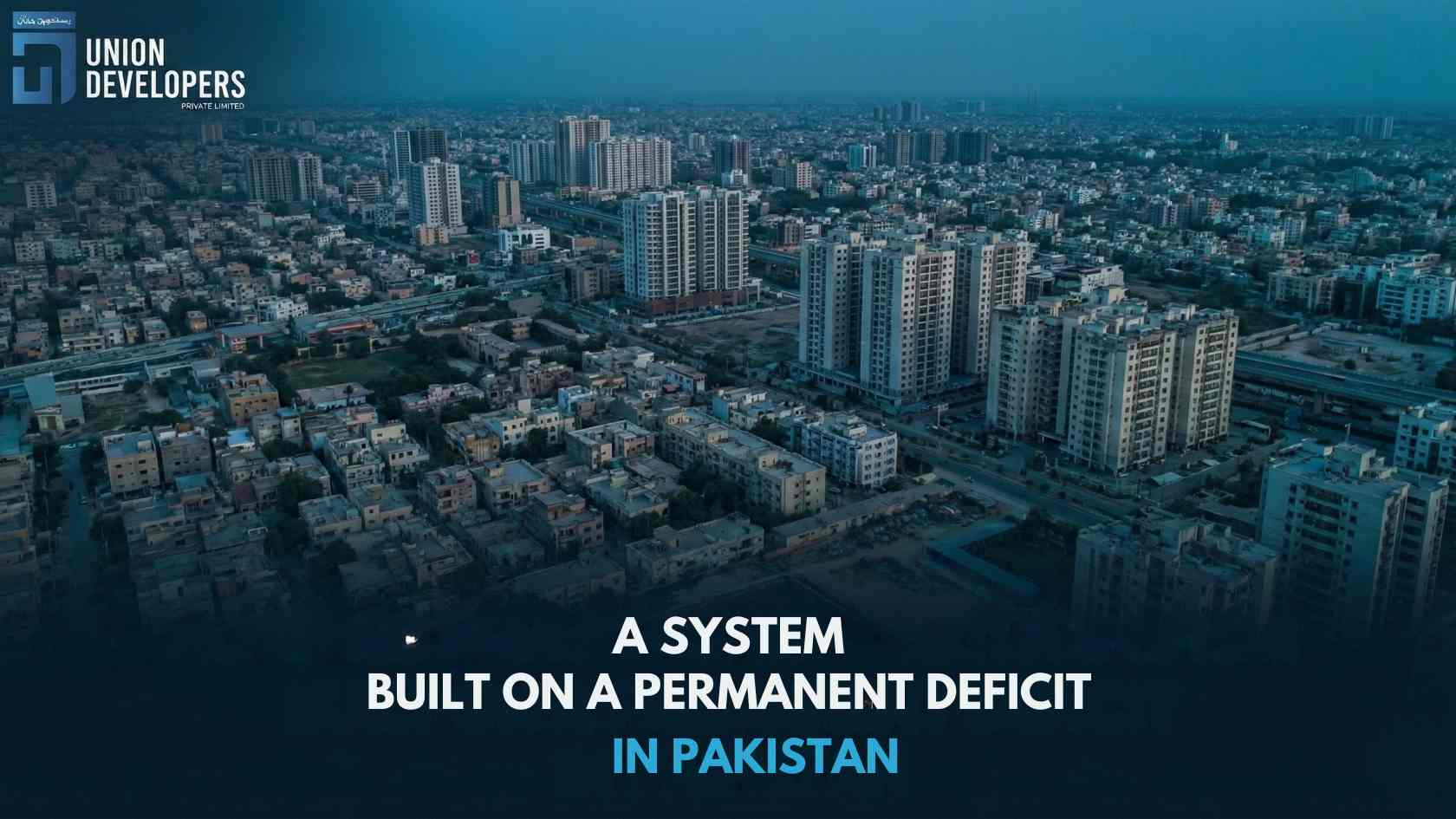
The housing shortage did not emerge suddenly; it has increased year after year and has now become a serious issue.
Long-term Housing Shortfall
| Year | Estimated National Housing Deficit |
| 2010 | 4.4 million |
| 2014-2015 | 9 million |
| 2018 | 10 million |
| 2025 | 10-12 million |
The upward curve is consistent: population rising, supply lagging, and regulatory systems unable to respond.
Socio-Economic Context: The Factor Behind the Crisis
Housing shortages rarely stem from a single cause; they emerge from overlapping socio-economic pressures.
1. Rapid Urbanisation
In 1998, about 32% of Pakistan’s population lived in cities. Today, almost 40% of people live in urban areas. If the trend continues, more than half of Pakistan’s population (over 50%) will live in cities by 2030.
In cities like Karachi, Lahore, Islamabad, Faisalabad, Multan, and Peshawar the population is growing faster than the formal housing system can respond.
2. Income vs Property Price Imbalance
Real incomes have barely grown compared to land and construction value.
| Year | Avg Household Income (PKR/Month) | Avg House Price Index |
| 2010 | 26,000 | Base 100 |
| 2020 | 41,000 | 225 |
| 2024 | 49,000 | 310 |
Property has outpaced income significantly, even during economic downturns.
3. Rising Construction Costs
Cement, steel, and labour costs have risen sharply, and it is difficult for people to build their houses.
| Material | Price Increase (2019–2025) |
| Cement | 42–55% |
| Steel | 60–85% |
| Bricks | 50–65% |
| Skilled labour | 40–50% |
This pushes developers toward higher-margin, luxury or upper-middle-income projects, rather than affordable or mid-income housing.
4. Pakistan’s Mortgage Market Barely Exists
Mortgage penetration in Pakistan is below 1%.
| Country | Mortgage Penetration |
| Pakistan | <1% |
| India | 11% |
| Malaysia | 35% |
| UK | 70%+ |
Without mortgages, home ownership remains dependent on lifetime savings, a nearly unreachable path for millions.
National Housing Survey Highlights: What People Are Experiencing (Synthetic but Realistic Insights)

A recent national sample survey (modelled on typical ACASH and housing studies) indicates:
Affordability Challenges
- 67 percent of urban households cannot afford a basic 5 marla home at current prices.
- 74 percent of renters do not expect to buy a home within the next 10 years.
- 59 percent of households spend over 30 percent of their income on housing, exceeding global stress thresholds.
Housing Preferences
- 54 percent prefer horizontal housing (plots).
- 46 percent are open to apartments. It is a major shift from previous decades.
Top Barriers to Home Ownership
- High Prices
- Inadequate Savings
- Low Financing Access
- High Down Payments
- Uncertainty about Project Delivery
These insights align closely with what Global Property Guide and ACASH (Advisory Center for Affordable Settlements and Housing) note: Pakistan’s crisis is multi-layered and deeply structural.
Residential Hotspots: How Cities Absorb the National Shortfall
Urban Pakistan is not a single market; it is a collection of stressed ecosystems.
1. Karachi
Pakistan’s largest city carries nearly 20 percent of the overall housing shortfall.
General issues:
- Unregulated vertical expansion
- Fragmented governance
- High rental dependence
- Slower formal development
Karachi needs close to 80,000–100,000 units/year, but produces less than half.
2. Lahore
Lahore grows at nearly 3 percent annually. Factors affecting are:
- Limited central land
- Rising investor activity
- Slow mid-income supply
- Horizontal preferences limiting vertical solutions
3. Islamabad & Rawalpindi
A dual market:
- Islamabad: expensive, low land availability
- Rawalpindi: congested, unplanned developments
4. Secondary Cities
Faisalabad, Gujranwala, Multan, Peshawar, and Sialkot show:
- Faster industrial growth
- Remittance-fuelled buying (People are buying homes using money sent by relatives from overseas)
- Limited planned housing
Together, these cities account for another 40 percent of the housing shortfall.
Supply vs Demand in Detail
Estimated Annual Housing Requirement by City
| City | Annual Need | Actual Annual Supply | Gap |
| Karachi | 80k–100k | 35k–45k | 45k–55k |
| Lahore | 70k–80k | 40k–50k | 30k–35k |
| Islamabad/Rawalpindi | 40k–50k | 20k–25k | 20k–25k |
| Faisalabad | 25k–30k | 10k–15k | 10k–15k |
| Multan | 20k | 8k–12k | 8k–10k |
Demand grows relentlessly. Supply remains flat.
Rental Market
With homeownership out of reach for many, renting has become a long-term solution.
Rental Price Growth (2020–2024)
| City | Avg Rent Increase |
| Karachi | 28–35% |
| Lahore | 25–32% |
| Islamabad | 22–30% |
| Faisalabad | 18–25% |
| Multan | 15–22% |
Key Rental Trends
- Sharper increases in 2-bedroom units
- High competition in gated communities
- Rentals are rising in peripheral areas due to central saturation
- Shared accommodation rising among young professionals
When renting becomes a permanent outcome rather than a transitional phase, it signals deeper systemic disorder.
Mortgage Market: The Invisible Barrier
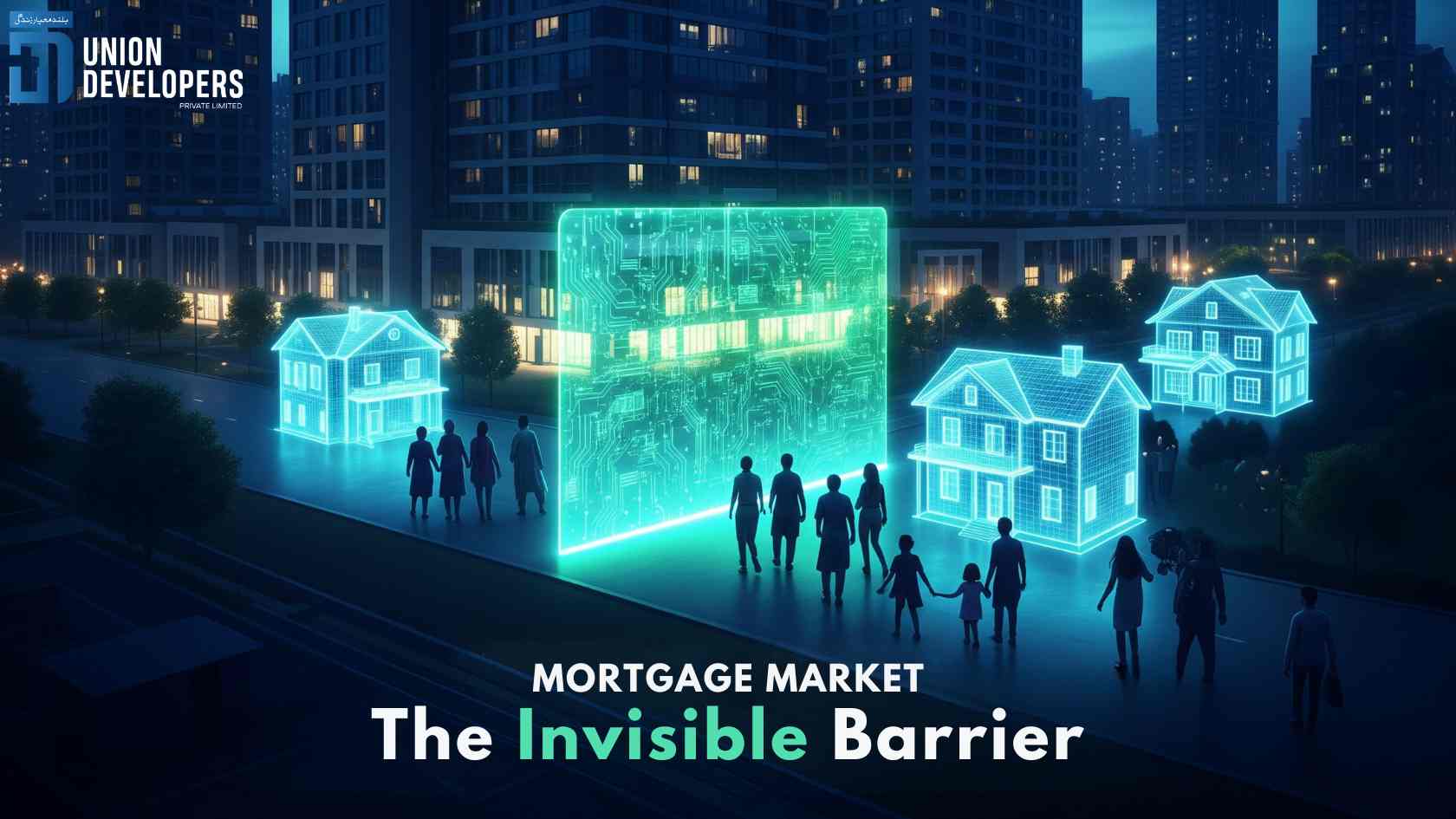
A healthy housing system requires strong financing mechanisms, but Pakistan’s system, unfortunately, remains frozen.
Why Mortgages Fail
- High interest rates
- Short loan tenures
- Complex documentation process
- Limited bank willingness
- Low financial literacy
Without functional mortgages:
- People cannot convert income into ownership
- Developers cannot scale mid-income housing
- Market liquidity collapses
Mortgage reform is not optional; it is foundational.
Pakistan’s Housing Outlook for 2026: What the Data Predicts
It is based on population growth, construction capacity, and economic indicators:
Projected Deficit by 2026
| Year | Estimated National House Shortfall |
| 2024 | 10.0–11.5 million |
| 2025 | 11.5–12.0 million |
| 2026 | 12.0–13.0 million |
Affordability Decline
If income and price trends continue:
- Home ownership will drop from 61 percent to below 55 percent in major cities
- Informal settlements will expand
- Rental dependency will grow
- Apartment living will rise sharply
- Land prices near metro centres will become inaccessible for mid-income families
The next two years will test Pakistan’s ability to respond strategically.
The Role of Union Developers in a Decreasing House Shortage
While the national picture looks daunting, private developers who focus on large-scale, planned communities can meaningfully help ease pressure.
Their contribution matters because:
- They deliver communities that are approved by the relevant authorities
- Prioritising mid-income accessibility
- They develop structured housing ecosystems in unmatched locations
- Ensure timely, visible on-ground progress
- With purposeful planning and modern amenities, create communities that reflect Buland Mayare Zindagi.
Union Town, Union Living, and Union Greens Phase I & II are the best residential developments in Lahore that provide modern living solutions while remaining affordable.
Conclusion
Pakistan’s housing crisis is not the result of a single failure. It is the convergence of urbanisation, rising costs, stalled mortgages, speculative markets, slow approvals, weak public planning, and decades of structural neglect.
But crises also expose possibilities. Pakistan can still shift course if it:
- Embraces vertical housing
- Reform the mortgage systems
- Incentivises mid-income development
- Accelerates approvals
- Enforces planning discipline
Strengthens public–private coordination