
Most buyers approach a property decision with three things in place: a budget, a preferred area, and whatever payment plan the developer is promoting that month. That is understandable. It is also rarely sufficient.
Price and location tell you what something costs today. They do not tell you where it is heading, how straightforward an exit will be if circumstances shift, or whether demand in that area reflects genuine interest or a well-funded sales push. For that, you need to look at a different set of signals altogether.
The fundamentals that drive long-term value tend to be consistent across property types, plots in mid-range schemes, apartments in newer towers, and everything in between. This guide covers the six that reliably matter.
Factor 1: Development Progress & Construction Pace
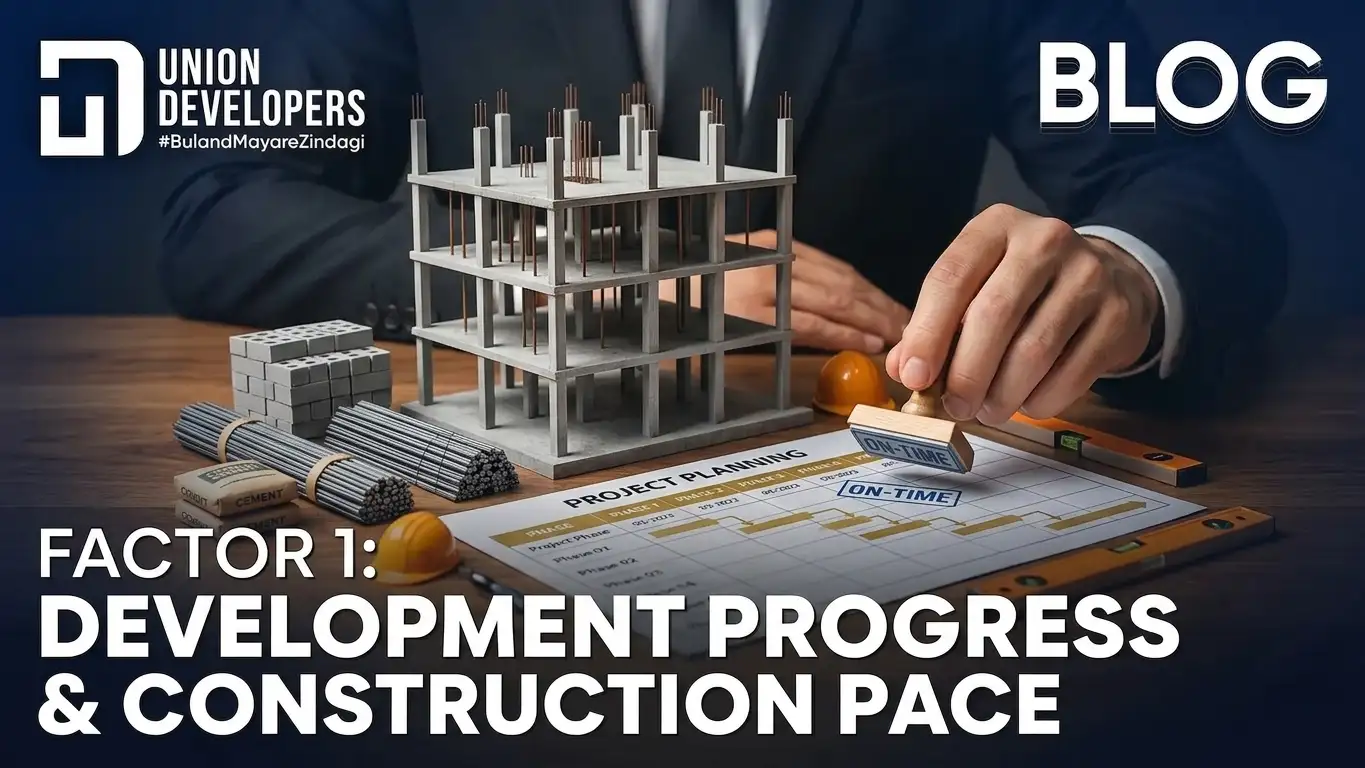
Visible, consistent activity on-site is one of the more honest signals a project can send. Sites showing steady physical progress tend to hold buyer confidence far better than those operating mainly on polished renders and projected timelines.
|
Observable Indicator |
Why It Matters |
|
Active road development |
Infrastructure is actually progressing, not just planned |
|
Heavy machinery and workforce presence |
Construction is funded and moving |
|
Utility installation work |
Points toward genuine operational readiness |
|
Boundary walls and commercial areas are taking shape |
Reflects phased development maturity |
|
Possession activity in certain blocks |
Builds market confidence in ways no brochure can |
Factor 2: Demand & Occupancy Levels
Occupancy is consistently undervalued as a market indicator in Pakistan, which is somewhat surprising given how much it reveals. A genuinely populated development signals trust, usability, and market acceptance in ways that sales figures simply cannot.
This matters most when evaluating apartments, mixed-use developments, or family-oriented residential communities, categories where the community environment directly shapes how long-term value is perceived.
Active residents, functioning commercial spaces, visible daily movement: these things reinforce each other over time. They support resale demand, strengthen rental potential, attract more consistent maintenance, and communicate to incoming buyers that people have actively chosen to be there.
Factor 3: Infrastructure & Connectivity Growth
Infrastructure shapes long-term appreciation more quietly than most buyers factor in. Lahore reflects this pattern fairly consistently.
Developments with reliable road access and proximity to commercial corridors, schools, hospitals, and employment centres hold demand more steadily. Projects near Ring Road interchanges and expanding urban corridors keep drawing buyers not out of sentiment, but because the practicalities of daily life are genuinely more manageable from those locations.
Practical Factors Worth Assessing
- Actual road access and real travel time during peak hours, not the developer’s estimate
- Infrastructure or road expansions are planned for the surrounding area
- Schools, hospitals, and retail that are already operational, not merely announced
- Whether public utilities are currently functioning or still at a planning stage
Buyers with experience in this market tend to study the surrounding area as carefully as the development itself. Good connectivity improves daily usability now and protects resale liquidity later.
A competitively priced development with poor access frequently underperforms despite its other qualities. Commercial activity around a development tends to lift surrounding values in ways no developer can manufacture on their own.
Factor 4: Payment Flexibility & Affordability Trends
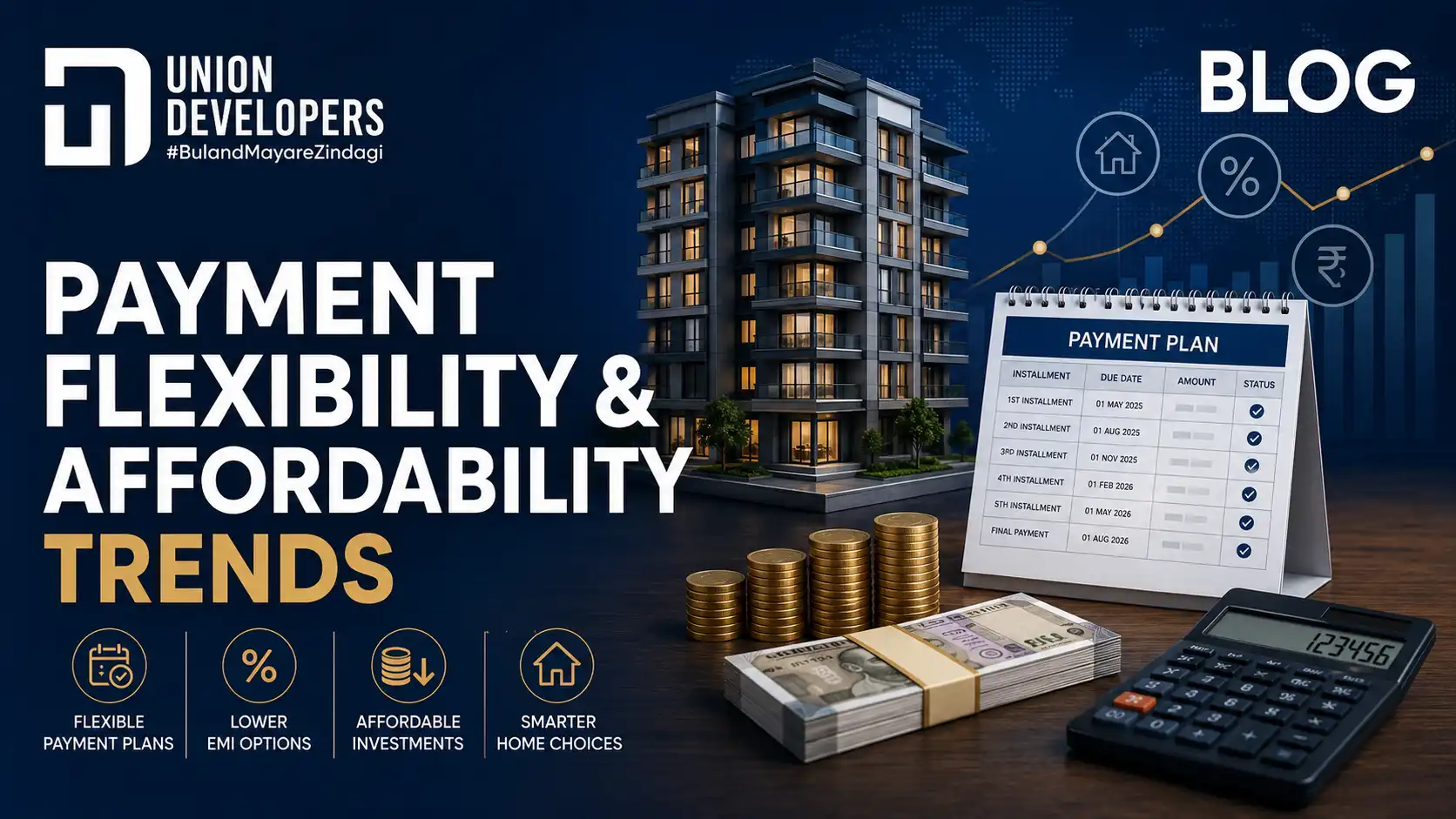
Accessible instalment structures have brought Pakistan’s property market within reach of a wider range of buyers, salaried professionals, overseas Pakistanis, and those working within a defined investment window. That is a real and meaningful shift.
The distinction worth keeping in mind, however, is between flexibility and financial stability. An attractive payment plan on a brochure does not necessarily reflect a project on solid footing.
Analyse Carefully:
- Whether the instalment structure is commercially sustainable for both parties
- How clearly are balloting and possession timelines communicated from the outset
- Whether payment schedules are transparent, upfront or only clarified when directly questioned
- Whether pricing reflects actual development milestones or responds primarily to sales pressure
Factor 5: Resale Activity & Market Liquidity
Secondary market activity is probably the most honest real-time signal of genuine confidence in a project. In Lahore, developments with active resale movement give investors a workable exit path and give incoming buyers a clearer picture of what the market is actually willing to pay.
A project can look compelling at launch. If buyers are struggling to sell several months in, or resale prices have quietly dropped below booking value, that communicates something significant about real demand, something a sales presentation will not cover.
Active, realistically priced resale movement points toward genuine ongoing interest and pricing that holds under market conditions. It is not always visible at first glance, but it is among the more reliable indicators available.
Factor 6: Developer Reputation & Long-Term Credibility
Location, pricing, payment terms, none of it holds if the developer lacks the operational discipline or financial capacity to deliver. Buyers across Pakistan have become considerably more focused on credibility, and the market has produced enough cautionary examples to make that scrutiny entirely justified.
What credibility looks like in practice:
- A verifiable record of completed, handed-over projects
- Legal clarity and accessible approvals documentation
- Communication that stays consistent through the development cycle, not only at the point of sale
- A genuine willingness to respond when buyers raise concerns
- A brand with enough long-term presence that its reputation carries real commercial weight
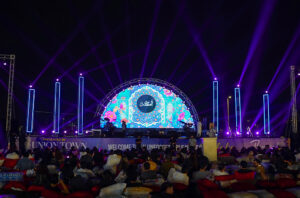
Strong developers performing well in Lahore, such as Union Developers, who built well-planned communities on global standards, featuring unmatched locations in Lahore. Union Town in the heart of urban Lahore, with triple access from Abdul Sattar Edhi Road, Kadir Topbas Chowk, and Khayaban-e-Jinnah, is one of their master-planned communities.
How End-Users and Investors Read These Indicators Differently
The same data point can carry quite different significance depending on what a buyer is purchasing for.
|
Indicator |
End-User Perspective |
Investor Perspective |
|
Development Pace |
Possession readiness and quality of living |
Appreciation potential |
|
Occupancy Levels |
Community environment and security |
Rental demand and market confidence |
|
Connectivity |
Daily commute practicality |
Future commercial growth |
|
Payment Plans |
Affordability and manageable cash flow |
Investment timing |
|
Resale Activity |
Long-term stability |
Exit flexibility |
|
Developer Reputation |
Reliability and trust |
Capital protection and delivery certainty |
A Practical Scorecard Before Committing
When comparing multiple projects, running each through the same set of questions tends to produce a more grounded evaluation than relying on how the most recent site visit felt.
|
Evaluation Factor |
Questions to Ask |
Score (1–5) |
|
Development Progress |
Is construction visibly and consistently active? |
|
|
Occupancy |
Are people genuinely living or operating there? |
|
|
Connectivity |
How accessible is the location during actual peak hours? |
|
|
Infrastructure |
Are utilities and roads operational, not just promised? |
|
|
Payment Transparency |
Are all charges and timelines clearly stated upfront? |
|
|
Resale Demand |
Is there genuine secondary market activity? |
Final Thoughts
Lahore’s property market has real momentum and genuine opportunity. The decisions that hold up over time, though, tend to be the ones made against ground-level reality rather than against marketing energy.
Projects with visible construction activity, real occupancy, strong access, transparent operations, and a credible delivery history perform more consistently over time.
Not without exception, property is rarely that straightforward, but it is consistent enough to make these indicators worth building into any serious evaluation.