
Real estate in Pakistan has always drawn interest. Some consider it the safest investment, while others consider it a quick way to make money. In reality, it falls somewhere between these two views.
By 2026, real estate will no longer be about guesswork, rumors, or quick flips. The market has shifted. Buyers are more careful, taxes are more important, paperwork is checked more closely, and bad choices can tie up your money for a long time.
This does not mean there are no opportunities. It means that those who succeed now are the ones who approach real estate professionally.
Whether you want to become an agent, start a property business, invest in plots, earn rental income, or get into development, this guide will show you how real estate works in Pakistan and how to approach it wisely.
What Is a Real Estate Business?
A real estate business is any business built around property. That includes buying, selling, renting, managing, developing, or marketing real estate.
In Pakistan, this usually includes:
- Property dealers and agents earn commission on sales or rentals.
- Investors buying plots, houses, flats, or shops.
- Developers launching housing schemes or buildings.
- Property managers handle tenants and rent collection.
- Consultants helping clients with research and transactions.
Many people believe real estate just means buying land and waiting. In reality, it is about creating value through smart deals, rental income, development, or the provision of professional services.
Why Real Estate Still Matters in Pakistan

Despite the market ups and downs, real estate continues important for several reasons:
Housing Demand Continues
Pakistan’s population continues to grow, and major cities keep expanding. More families need homes, apartments, and secure communities.
Property as a Source of Long-term Wealth
Many investors still trust land and property more than volatile alternatives.
Rental Income Opportunities Exist
In the right locations, houses, flats, shops, and offices can generate a steady monthly income.
Urban Expansion Creates New Markets
As municipalities expand, new residential and commercial areas appear. However, do not mistake demand for guaranteed profit. Poor locations, fake paperwork, bad timing, and overpaying can ruin your returns.
Types of Real Estate Business in Pakistan
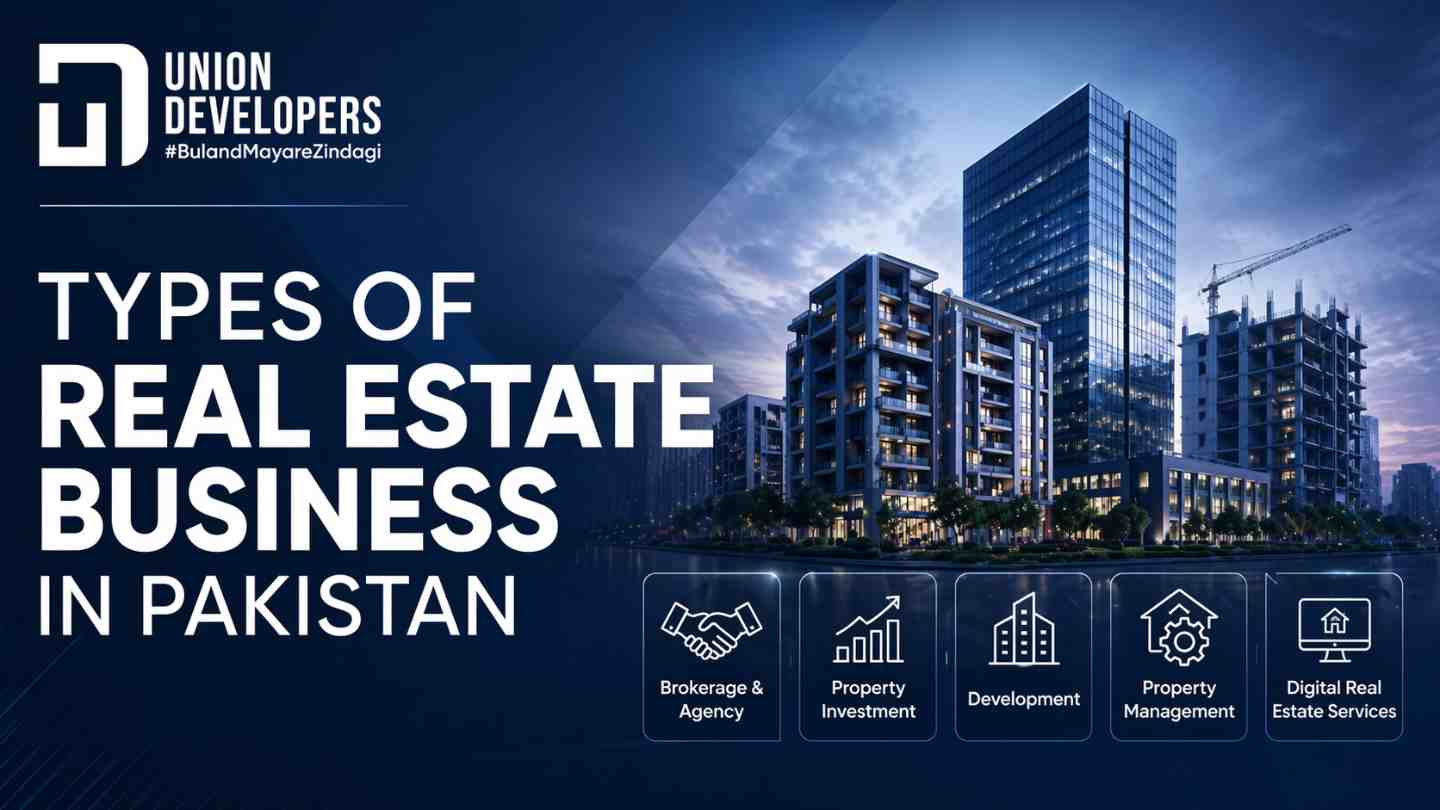
1. Brokerage & Agency
This is the most common entry point. You connect buyers and sellers or landlords and tenants, then earn commission.
Best for people with:
- Strong networking skills
- Local market knowledge
- Sales ability
- Low starting capital
2. Property Investment
You buy property to earn through appreciation or rent.
Common assets include:
- Residential plots
- Houses
- Apartments
- Shops
- Offices
3. Development
You buy land, get the necessary approvals, build projects, and then sell or rent out the units. This offers higher rewards as well as comes with greater risk, higher capital requirements, and added complexity.
4. Property Management
You handle rent collection, maintenance, tenant issues, and keep properties occupied for owners. This service is becoming more popular, especially with overseas Pakistanis.
5. Digital Real Estate Services
Modern businesses now earn through:
- Verified listings
- Lead generation
- Market reports
- Online advisory services
How to Start a Real Estate Business in Pakistan
1. Choose Your Business Model First
Trying to be an agent, investor, consultant, and developer at the same time is a common beginner mistake.
Pick one lane first.
For example:
- If you have low capital, start a brokerage.
- If you have savings, start investing.
- If you have technical and financial backing, consider development.
2. Pick a City, Location & Niche
Real estate in Pakistan is very local. Karachi, Lahore, Islamabad–Rawalpindi, Faisalabad, Multan, and Gwadar each have their own market patterns.
Even within a single city, different neighborhoods can perform very differently. Pick a niche like residential plots, apartments, commercial shops, warehouses, rental properties, or services for overseas buyers, and learn about it in depth.
3. Make a Practical Budget
The amount of money you need depends on your business model. A small agency can start with less money, but an investment business needs funds for buying property, legal fees, taxes, transfer charges, marketing, and cash reserves.
Development needs much more financing, approvals, and the ability to manage projects well. Never put all your money into one deal, because real estate is not always easy to sell, and delays are common.
4. Register Properly
If you plan to operate as a formal business, choose a legal structure that matches your scale and risk. A sole proprietorship may work for a small operator, while partnerships or companies are more suitable for businesses with multiple owners, staff, or growth plans.
If you incorporate a company, complete the registration and compliance process properly. Then make sure your tax registration and filings are handled correctly from day one.
5. Build a Verification Process
This step is what sets serious professionals apart from careless ones.
Before any deal, check:
- Ownership documents
- Registry records
- Transfer papers
- Society approvals
- Possession status
- Outstanding dues
- Tax obligations
- Legal disputes
- Encumbrances or mortgages
A low-priced property with poor paperwork often leads to costly problems.
6. Build Your Network & Digital Presence
Today, a real estate business in Pakistan cannot rely only on word of mouth. Create a professional website or use verified listings, keep your business profiles active, use good photos and videos, and reply quickly to leads.
Also, build strong relationships offline with lawyers, tax advisers, developers, builders, surveyors, landlords, and serious buyers.
7. Verify Property Before Buying or Selling
Many people look at the price first, but smart buyers check everything else before thinking about the price.
Use this checklist:
- Confirm seller identity
- Confirm authority to sell
- Match documents with the actual site
- Check the map and location access.
- Verify society approval status.
- Check dues and utility status.
- Confirm transferability
- Review litigation risk
- Use a lawyer for high-value deals.
Skipping due diligence does not show confidence; it shows carelessness.
Best Business Models by Budget
| Low Capital | ● Brokerage
● Rentals placement ● Lead generation ● Market advisory These rely more on trust and hustle than large funds. |
| Medium Capital | ● Small residential investments
● Undervalued units with clear documents ● Rental flats ● Small commercial assets |
| High Capital | ● Warehouses
● Commercial plazas ● Mixed-use projects ● Development ventures |
Which Property Types Usually Make Sense?
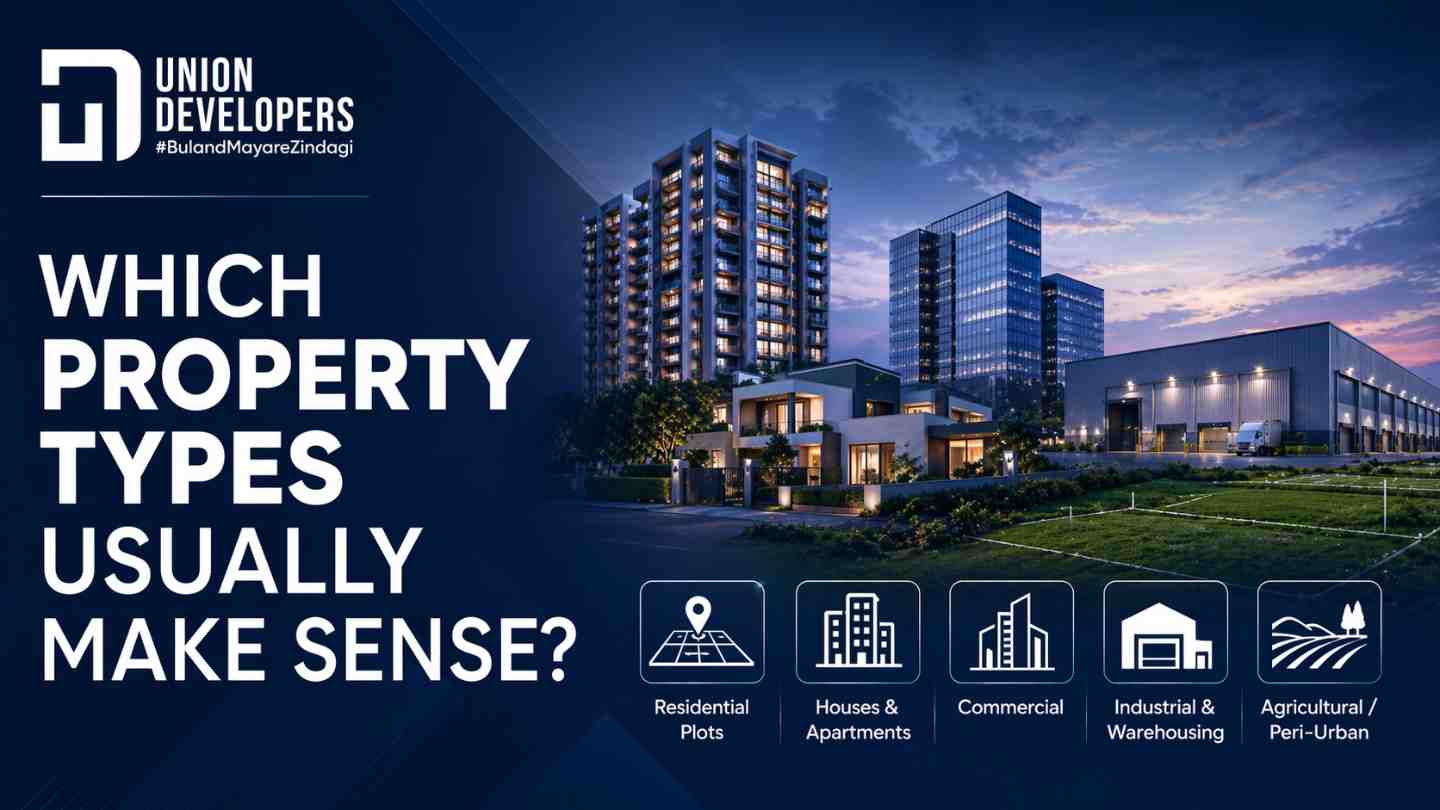
Residential Plots
Residential plots are popular for medium to extended growth. However, many investors buy plots in bad locations and end up waiting a very long time for returns. For Lahore-specific comparisons, review plots on installments in Lahore.
Houses & Apartments
Useful for both end users and rental income. In Lahore, buyers often compare apartments for sale in Lahore for both end-use and long-term rental potential.
Commercial Property
Commercial property can give strong returns, but location and the quality of tenants are more important than any sales pitch.
Industrial & Warehousing
Useful in growing trade zones and logistics areas.
Agricultural or Peri-Urban Land
This type of land can appreciate in value, but you have to carefully review the title and zoning risks.
How to Judge a Good Location
There is no single “best” city for every investor. Markets such as Karachi, Lahore, and Islamabad–Rawalpindi often deliver deeper demand, broader buyer pools, and stronger rental ecosystems.
Developing opportunities in cities such as Faisalabad, Multan, and other coastal or corridor-linked locations may appeal to investors with different risk appetites.
Instead of asking, “Which city is best?” ask, “Which city and area match my budget, how long I want to invest, and how much risk I can handle?”
When comparing locations, pay attention to infrastructure, access roads, approved planning, utility availability, occupancy demand, development pace, and resale depth. For a Lahore-specific benchmark, compare top housing societies in Lahore for investment.
Also Read: Top Cities for Real Estate Investment: High-Return Opportunities to Watch
Common Risks in the Real Estate Business in Pakistan
- Unclear ownership or incomplete documentation
- Project delays and possession uncertainty
- Overpriced inventory marketed through hype rather than fundamentals
- Low liquidity in slower or speculative locations
- Tax and policy revisions that affect transaction costs.
- Dependence on unofficial information instead of verified records
A deal that looks profitable can still be a bad business choice if it is hard to exit or involves considerable legal risks.
How to Make Your Real Estate Business More Profitable
– Specialize instead of trying to sell every kind of property.
– Work only with verified listings and documented pricing.
– Build a reputation for honesty and follow-through.
– Track conversion data: inquiries, visits, negotiations, and closing ratios.
– Use content marketing, local SEO, and social proof to generate qualified leads. For a practical example, study these real estate investing tips.
– Protect cash flow by keeping reserves for delays, taxes, and repairs.
– Focus on repeat business and referrals, not just one-off deals.
Real Estate Trends in Pakistan for 2026
Several shifts are driving the market:
- Greater focus on compliance and documentation
- More digital tax and registration processes
- Stronger demand for rental-producing assets
- Rising interest in gated and managed communities
- Smaller, effective urban units are gaining attention.
- More serious investors are avoiding speculation-only deals.
Is Real Estate in Pakistan Still Profitable?

Yes, but making a profit now depends much more on how well you run your business than on market excitement. The best in the business do not rely on rumors or short-term hype.
They check paperwork, know the tax rules, choose locations carefully, keep enough cash on hand, and follow a reliable business process. In short, real estate in Pakistan can still be profitable, but it rewards careful planning more than guesswork.
Frequently Asked Questions
Q 1: Is the real estate business profitable in Pakistan?
It can be, if deals are verified and pricing is sensible. Many losses come from poor decisions, not from the market itself.
Q2: How much money do I need?
It depends on the model. Brokerage can start with low capital. Investment and development need far more.
Q3: Is investing in commercials better than residential?
Not automatically. Commercials can yield more but usually carry a higher entry cost and tenant risk.
Q4: What is the safest way to start?
Usually, a focused brokerage model or a small verified investment strategy.
Final Thoughts
The real estate business in Pakistan. There are still many opportunities in Pakistan’s real estate market, but the path to success has changed. Now, the winners are not those who chase every rumor, but those who understand paperwork, check approvals, plan their finances, pick the right niche, and treat real estate as a serious business. Readers who prefer to work with an established developer can also review Union Developers and its active communities.
A business that lasts starts with one market, one strategy, and one standard: only deal in verified opportunities. That single principle improves trust, protects capital, and gives your business a much stronger chance of lasting growth.