
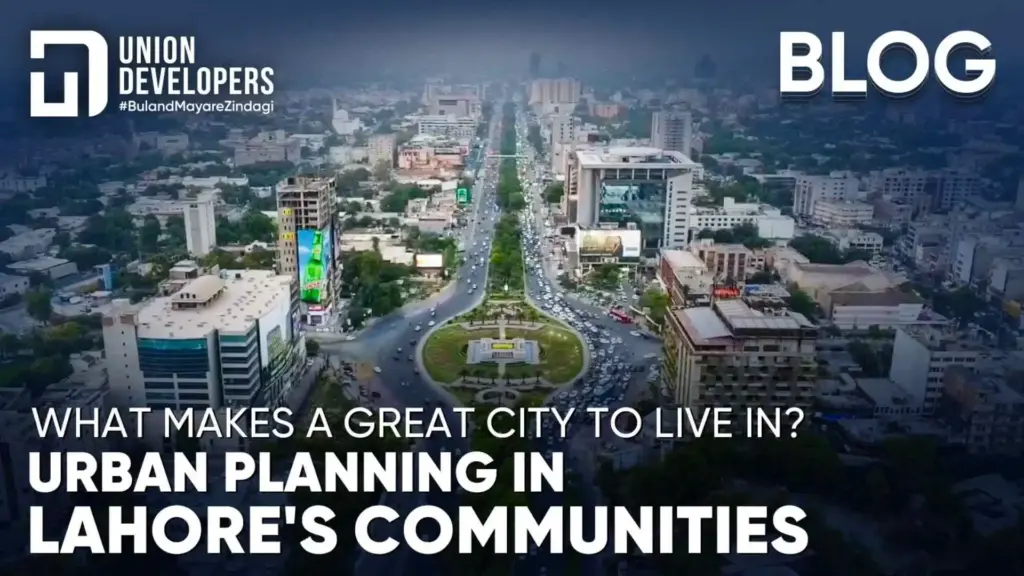
Walk through almost any new housing project in Lahore, and the entrance looks the same everywhere. Big gate, the boulevards, greenery near the sales office. Saplings that will not give real shade for years.
None of that tells you whether the place will actually work once people move in. So, which matters more, the photograph or the place you will actually live in? That is the real question behind well-planned communities in Lahore, not how a project looks on launch day.
This article goes through what decides whether a community holds up over time, and what to check before signing anything.
Why Beauty Alone Does Not Make a City Livable
Most of the time, a community looks planned and peaceful from the outside, with wide boulevards, green belts, and built residential and commercial properties. However, these factors don`t ensure how comfortably residents will live here.
Comfort comes from systems, not scenery. Planners separate these into image and function for exactly this reason. A project can look complete in every photograph and still leave residents without working drainage during the first monsoon, since photographs do not test plumbing.
Lahore has produced enough cases like this that buyers now ask sharper questions before signing than they did a few years ago.
What Defines Well-Planned Communities in Lahore
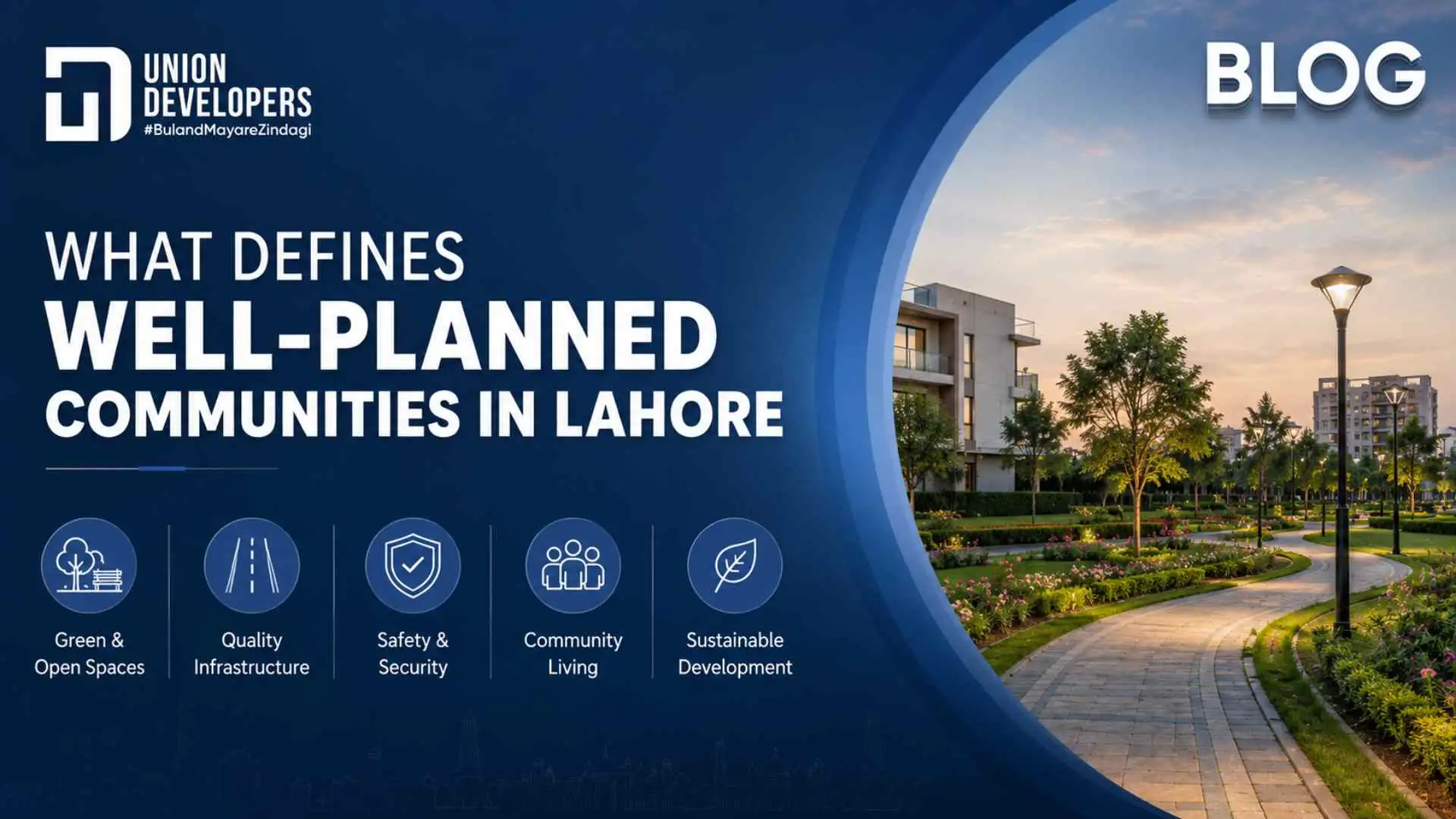
A handful of measurable qualities usually separate a community that actually works from one that just looks good in a brochure.
Accessibility matters more than any other factor while evaluating a community. How easily everyday needs are accessible, including schools, hospitals, markets and shopping centres, without fighting through a single choke point every day, and one congested entry road is enough to frustrate an entire community.
Green space matters too, but not the kind near the entrance, built mainly for photographs. A park that sits three blocks away from where most people actually live does very little for them. Distributed green space, even small areas of it, beats one large decorative area that few residents ever use.
Density is its own balancing act. Spread a community too thin, and infrastructure goes to waste. Pack a community too tightly, and roads, parking, and utilities buckle under daily use. The ones that age well usually land somewhere in the middle, not at either extreme.
Surface Beauty vs Real Livability
| What You See in Marketing | What It Actually Tells You |
| Wide Entrance Gate & Signage | Says little about traffic flow inside the community. |
| Landscaped Main Boulevard | Does not guarantee green space near individual blocks. |
| Modern Building Facades | Does not indicate construction quality or maintenance cost after handover. |
| Furnished Show Units | Does not reflect actual unit sizes or material standards across the project. |
None of this means marketing visuals are dishonest. It just means they answer a different question than the one you actually need answered.
What Buyers Should Look for in Housing Societies in Lahore and Apartment Projects
Before anything else, confirm the development authority’s approval status, and check whether the road widths on the ground actually match the approved layout.
For housing societies in Lahore, ask whether sewerage, water, and electricity are functional today, not promised for some later phase. When a society tells you utilities are “coming soon,” it’s really just asking you to wait, because there is no fixed date attached.
For your information: “Apartment buyers face a different set of questions. Elevator capacity for the number of units. Parking ratio per family.”
How Urban Planning Affects Long-Term Property Value
Buyers often see planning quality as just a lifestyle perk, missing its financial weight; that is a mistake. Solid infrastructure keeps maintenance costs steady, and steady costs protect resale value over time.
Shorter commutes and walkable layouts also drive stronger rental demand, since Lahore tenants prioritise travel time heavily. Looking ten or fifteen years ahead, Lahore’s most livable communities are usually the ones rooted in solid planning, not the ones relying on looks alone.
A Buyer’s Checklist for Evaluating Community Design
- Before choosing a community, always check whether it’s approved by the relevant regulatory authorities.
- Take a full tour of the community, including its internal roads, not just the main boulevard.
- Check whether utilities are properly installed throughout the community.
- Visit in the evening to get a sense of the lighting and security.
- Ask who handles maintenance after handover, and how that work is funded.
- Compare green space across different blocks, not just near the entrance.
- Match the project’s current progress against its published development timeline.
Union Developers & the Standard for Livable Communities in Lahore
This is the same discipline Union Developers has built its name on. Union Living and Union Greens Phase I have already been developed and delivered. Not promised. Not “coming soon.” People already live there.
Union Greens Phase II carries the same approach into a larger, already-developed footprint. Union Town is moving fast, built on the identical principles of access, green space, and balanced density that show up across every Union Developers project.
The standard behind all of it is the same: build to international standards, and give residents a genuinely Buland Mayar-e-Zindagi, a standard of living defined by how a place functions and not just how it photographs.
Choose Communities Built for Living, Not Just for Looking
Strip away the entrance gate and the show garden. What remains is what actually defines well-planned communities in Lahore: infrastructure that works, services within reach, density that does not strain, and green space that residents actually use. Buyers who judge a project by these standards usually end up better off than those who judge it by a launch-day photograph.
Anyone comparing housing societies in Lahore, or weighing one apartment project against another, should ask these questions first. Livability is not what a project promises. It is what residents deal with every single day, long after the marketing has moved on.