
Buyers evaluating property in Pakistan need one question answered before comparing projects: which city holds residential demand through every market cycle?
The data points to Lahore as a growing urban city. The city houses more than 13 million residents, records positive net migration every year, and maintains short vacancy periods across apartments, plots, and gated communities.
This article lists the factors behind that demand, explains how each factor converts into property demand, and identifies which housing format suits which buyer.
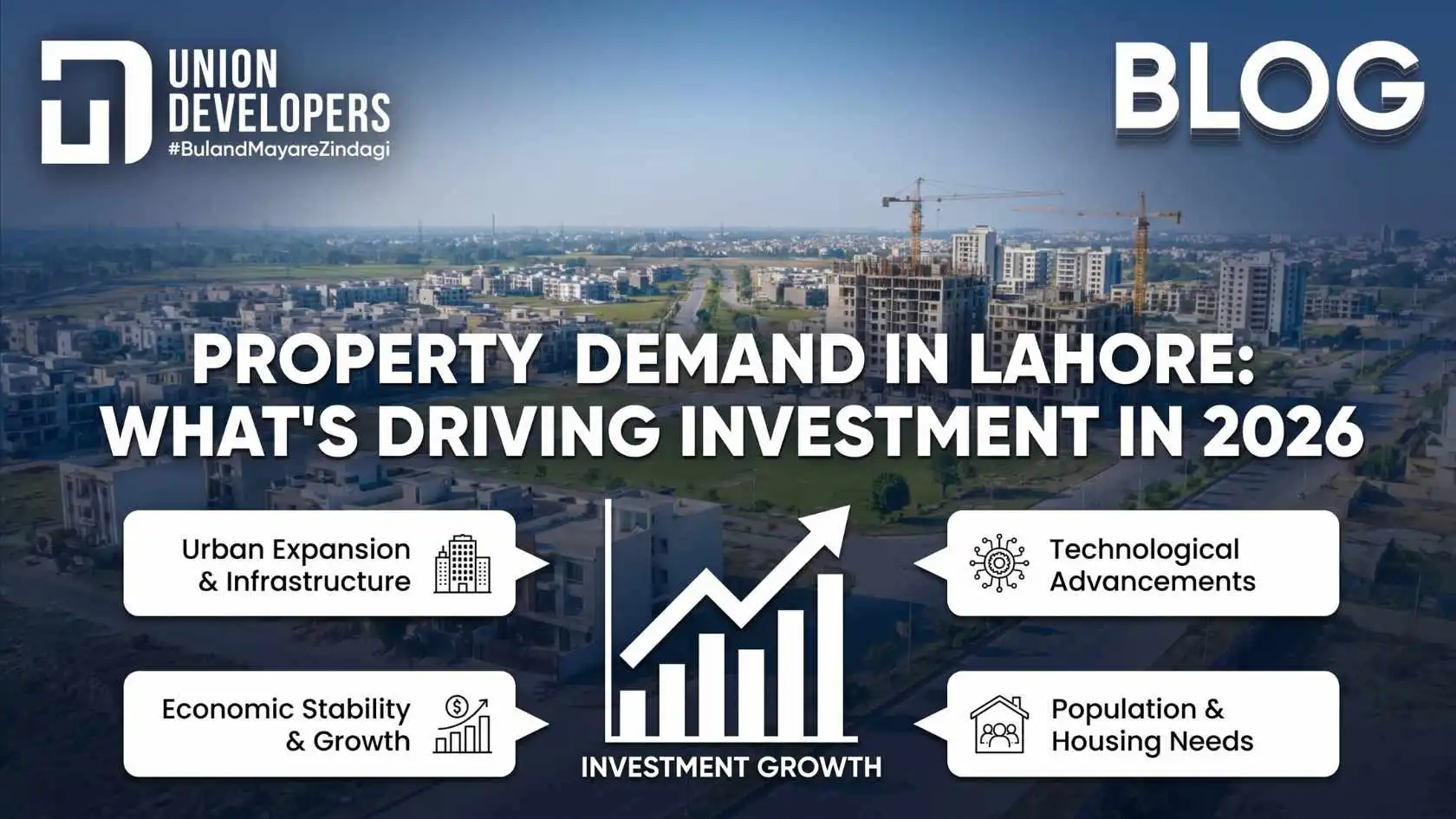
Property Demand in Lahore: What’s Driving Investment in 2026
Tourism and residence produce different economic outcomes. Tourism generates short-term spending. Residence generates occupancy, rental yield, and resale liquidity.
Property evaluation depends entirely on the second category. Yet, Lahore performs strongly on it for structural reasons:
- Provincial capital status concentrates the assembly, the High Court, regulatory offices, and regional headquarters of banks and large firms in the metropolitan area.
- One of the highest concentrations of educational institutions in Pakistan operates within the city boundary.
- Resident retention stays high: a large share of students who arrive for degrees remain for employment, purchase homes, and settle permanently.
Retention is the single most important variable in property analysis. Rents hold, resale stays quick, and prices recover from downturns only in cities where households intend to stay. Lahore has demonstrated this across decades.
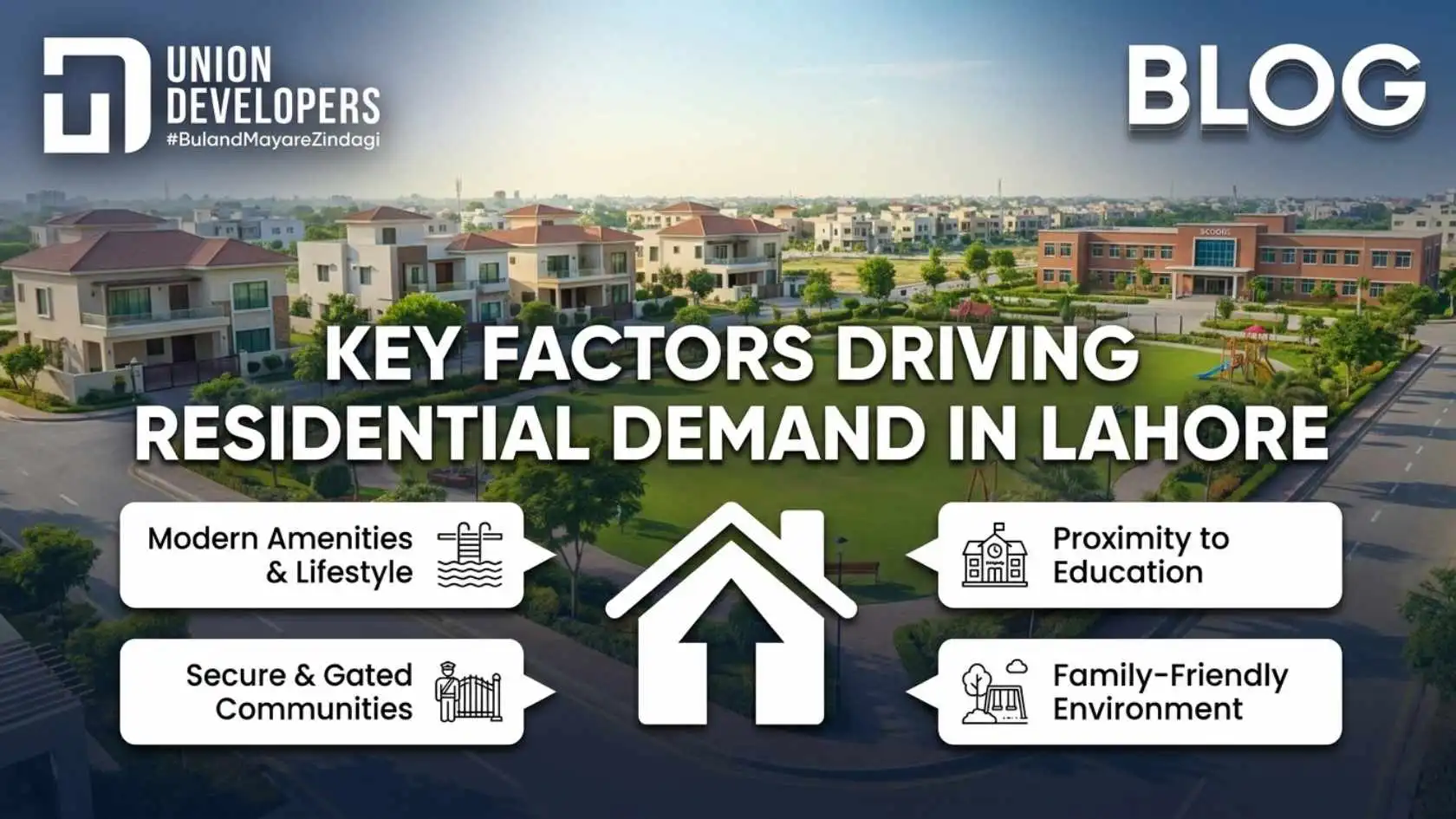
Key Factors Driving Residential Demand in Lahore
1. Education
Some famous universities, including Punjab University, LUMS, UET, and GCU, operate alongside several hundred private schools and colleges. This produces two measurable demand streams. Families relocate permanently for school access, and overseas Pakistanis purchase apartments as accommodation for children during degree programmes.
2. Healthcare
Hospital proximity ranks as a primary location for a peaceful lifestyle and business. Shaukat Khanum, Mayo, Services, and well-reputed private hospitals across Gulberg and Johar Town provide quality care within an approximately 20-minute commute.
3. Growth & Career Opportunities
Lahore’s economy has expanded many sectors, including textile, retail, software, logistics, construction, and food processing. This expansion increases housing demand from single-sector downturns.
The result feeds both property markets simultaneously: professionals rent through their twenties and buy in their thirties as incomes rise.
4. Urban Expansion
Lahore is expanding physically along documented corridors. The Ring Road and its southern loop have opened Raiwind Road and the areas beyond Thokar to planned development that did not exist twenty years ago.
Urban expansion matters to buyers for a practical reason: it creates new supply at accessible entry prices while established areas continue to appreciate. The market therefore serves both first-time buyers and long-term investors.
5. Connectivity
The Motorway network, the Ring Road and Allama Iqbal International Airport link Lahore to other cities of Pakistan. However, Metrobus and the Orange Line have reduced the hassle for long commutes within Lahore.
For overseas buyers, direct international flights determine whether a property gets visited and used or left idle between rare trips.
6. Well-Planned Communities
Lahore holds a long, verifiable record of planned development. Communities designed thirty years ago with proper road hierarchies, parks, commercial zones, and utility infrastructure still command premium prices.
On the other hand, in the southern corridors of the city, well-planned communities have updated living standards. Wide roads, underground utilities, dedicated green areas, and gated security have increased demand among the people.
Master planning is now a baseline expectation, and the market rewards developers who deliver it.
How These Factors Convert into Property Demand
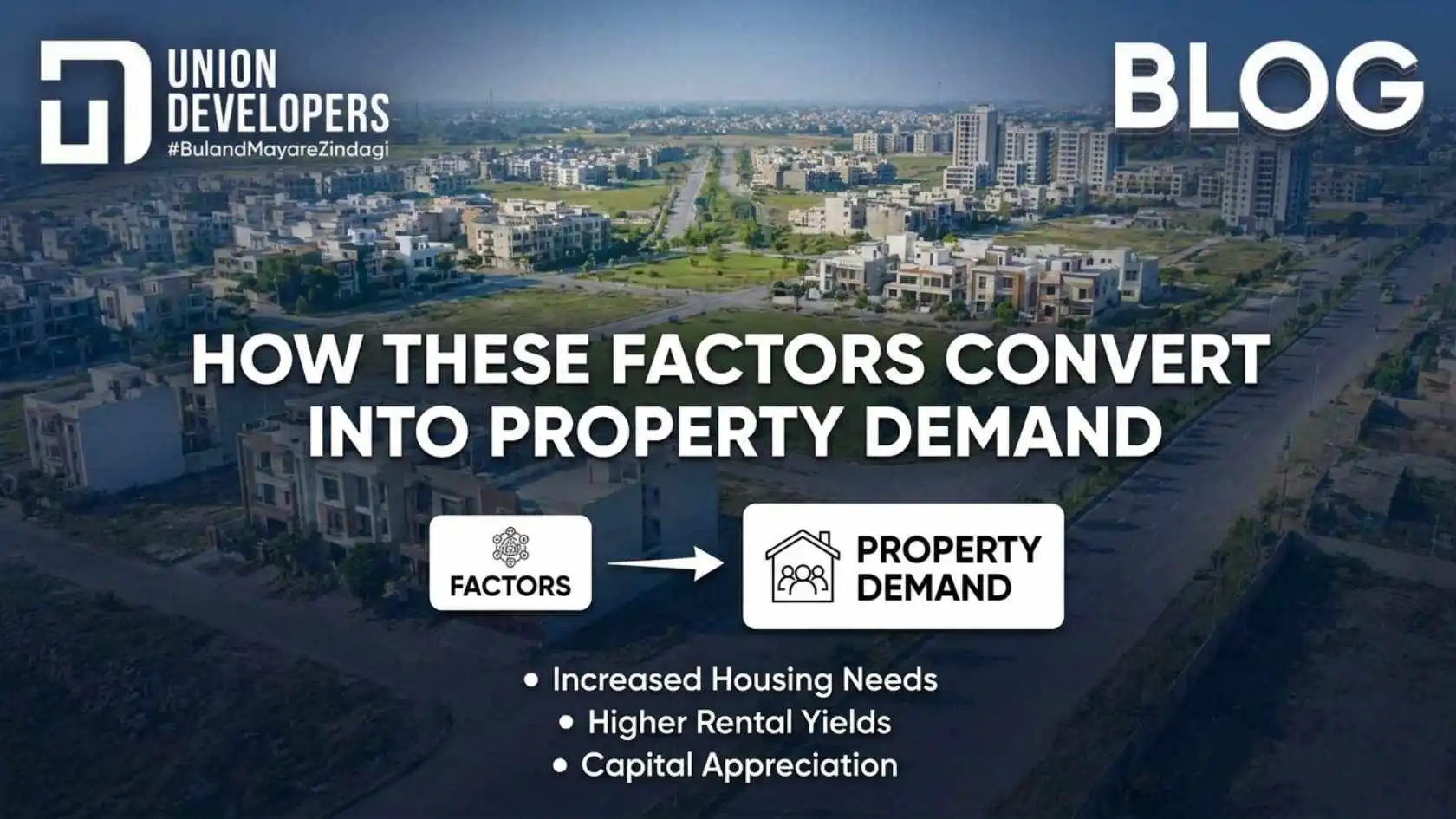
- Students and young professionals require secure, well-maintained and affordable living solutions. This demand is entirely met by apartments, due to their constant expansion.
- Families with school-going children require space, parks, gated security, and neighbours at a similar life stage. Planned communities are therefore gaining popularity due to complete living solutions.
- Senior professionals and returning overseas Pakistanis require full amenities without the responsibility of maintaining a standalone house. Serviced buildings with maintenance teams and controlled access meet this requirement, which explains the sustained growth of luxury apartments as a distinct category.
Which Housing Format Suits Which Buyer
| Format | Best suited for | Income during holding | Key consideration |
|---|---|---|---|
| Apartment | First-time buyers, rental investors, overseas owners, small households | Rental income starts immediately | Constant tenant supply near universities and commercial zones |
| Plot | Patient investors, families planning to build | None until sale or construction | Development timeline must be verified against delivered work |
| Gated community home | Established families seeking long-term settlement | Rental possible, usually owner-occupied | Higher entry price, strongest resale demand in mature communities |
Three Checks Before Deciding
- Match the format to your timeline: an apartment produces rent immediately, a plot pays only at exit.
- Verify approvals, title documents, and the developer’s delivery record without exception.
- Inspect the location twice, once during morning traffic and once after dark, since access and surroundings reveal what maps and brochures omit.
What Makes Location Quality Last
Prices fluctuate with markets. Location quality changes far more slowly, and it protects capital through cycles. Durable locations share identifiable traits:
- Employment and education nearby, not promised
- Arterial roads already built and in use
- Functioning utilities and active maintenance
- A visible, established resident base
Any location marketed primarily on future announcements fails this test. Measured against these criteria, Lahore contains more durable locations than any other city in Punjab, and each completed stretch of infrastructure adds new ones.
How Union Developers Answers This Demand
Union Developers has been developing in Lahore since 2004, and its portfolio maps directly onto the buyer segments listed above. Union Town, Union Greens Phase I, and Union Living serve families seeking well-planned communities with parks, secure access, and plots on manageable payment structures along the city’s expanding southern side.
On the other hand, Union Luxury Apartments serve professionals and overseas Pakistanis seeking modern urban living, with maintenance, amenities, and security managed by a single management structure.
The standard across all projects is Buland Mayar-e-Zindagi: an elevated standard of living delivered through planned infrastructure and premium amenities. For buyers seeking to invest in Lahore, this is what a two-decade delivery record in one city looks like practically.
Find the Right Fit for Your Goals
Lahore rewards buyers who match the right format to a clear purpose. A rental investor, a family buying a home, and a long-term holder each need different options, and the goal should be fixed before the project is shortlisted.
Set the budget against that goal first. Then explore Lahore projects that fit your lifestyle and investment goals.