

Open any property advert in Lahore, and it leads with the price, the plot size, and a possession date. What the land is actually like barely gets a mention, and that is the part where value quietly climbs or slips over the years.
Put a family next to a choked drain, or an open dumping ground, or a block with no green buffer at all, and the first proper monsoon will show them exactly what they bought. Environmental quality is not an ecology lecture.
It is a direct measure of how comfortable, healthy, and sellable a home stays over the next ten to twenty years. This guide breaks down the land and planning factors that shape value across Lahore, and the exact checks a buyer can run on site.
Why Environmental Quality Reaches the Price, not just the Air
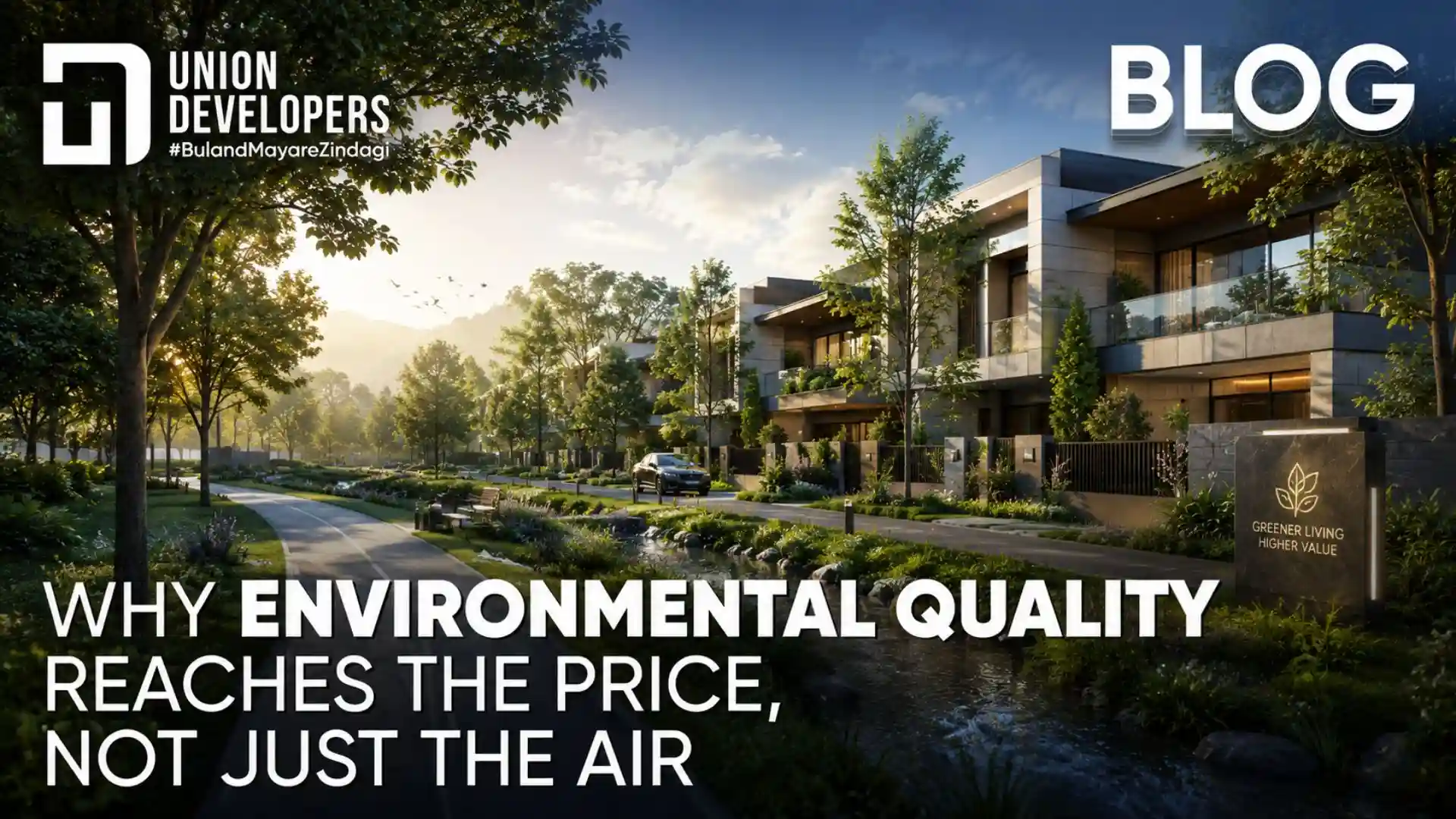
Buyers tend to treat pollution and planning as soft issues, separate from money. In practice, they behave like slow interest. Weak drainage, poor waste handling, and thin green cover do not announce themselves at booking.
They surface later as flooded streets, health complaints, falling rental demand, and resale prices that lag the wider area.
A well-planned community protects value in three concrete ways:
- It keeps daily living conditions stable, so residents stay and word of mouth stays positive.
- It reduces the maintenance surprises that erode both comfort and monthly budgets.
- It signals discipline to future buyers, which shortens resale time and holds the asking price.
The Residential Factors that Decide Livability & Value
| Factor | Why it Matters to a Buyer | Warning Sign on the Ground |
|---|---|---|
| Drainage & Slope | Decides whether streets flood in monsoon and whether basements stay dry | Standing water, silted channels, no visible storm drains |
| Waste Management | Affects hygiene, odour, and pest problems across the block | Open dumping points, irregular collection, litter in green belts |
| Air & Dust | Influences daily health and how clean the home stays | Heavy road dust, nearby unmanaged industrial or brick-kiln activity |
| Green Cover | Cools the microclimate and lifts both wellbeing and perceived value | Bare plots sold as parks, dead or unmaintained plantation |
| Construction Debris | Shows how the developer manages an active, growing community | Rubble left on roadsides, blocked footpaths, no site discipline |
| Maintenance Culture | Predicts how the community will look in five years, not on launch day | Broken streetlights, unswept roads, non-functional common areas |
How Poor Planning Erodes a Home over Time
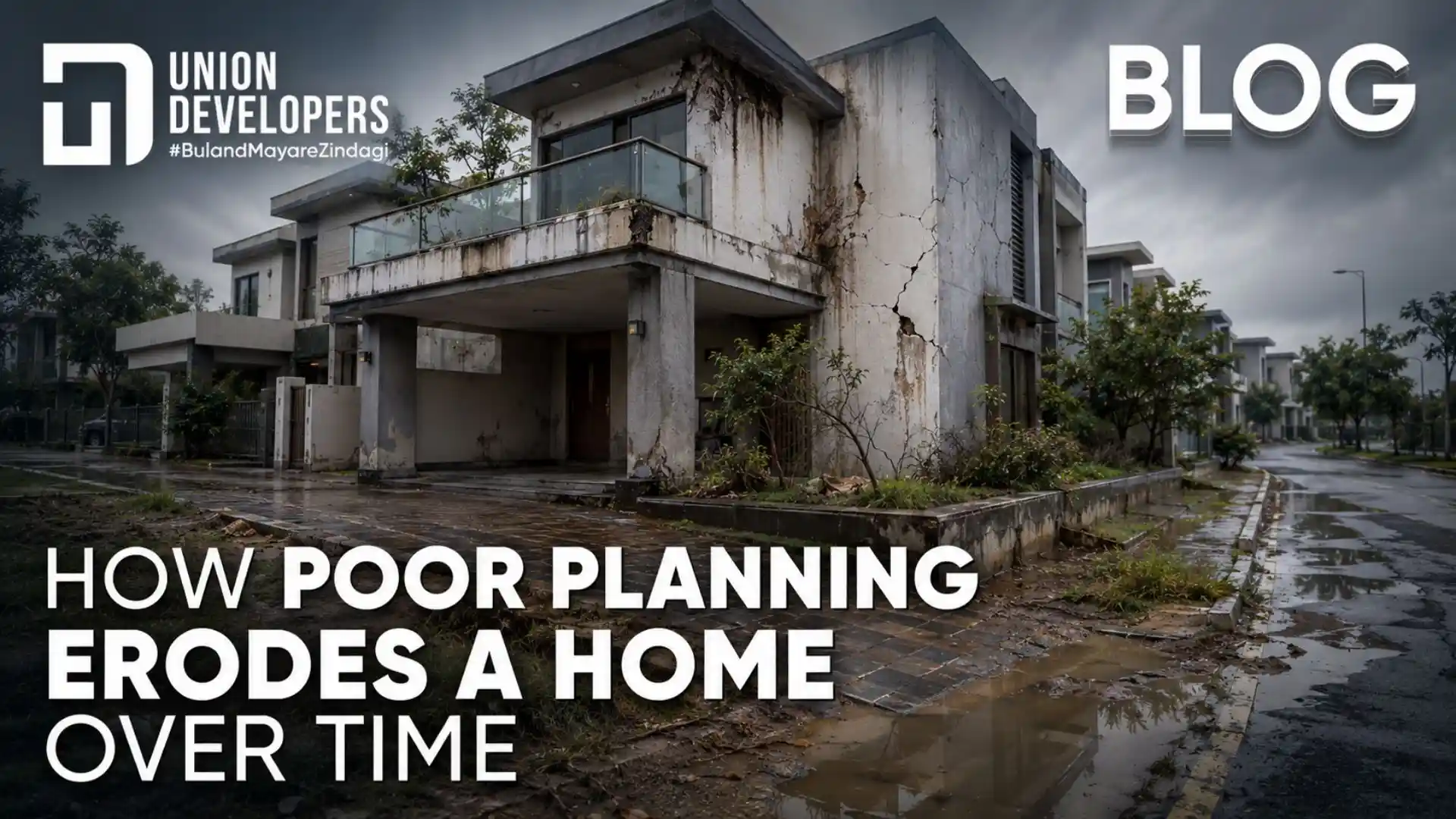
The damage is rarely dramatic on day one. It compounds. Weak drainage shortens road life. Water pools, works into the surface, and the tarmac goes early. Bad waste handling brings pests, then complaints, then tenants who leave, so rents drift down with them.
None of these is a disaster by itself. But stack them, leave them a few years, and they quietly cap what a home there can sell for.
Value, in other words, is not only bought. It is maintained or lost by the ground around the door.
The Site Visit Checklist Buyers Should Actually Use
The only reliable way to judge a community is to stand inside it and look. Carry this checklist on every viewing.
| Area to Check | What to do on Site |
|---|---|
| Water & Drainage |
|
| Waste & Hygiene |
|
| Green & open Space |
|
| Build Discipline |
|
| People Signals |
|
What a Well-planned Community Does Differently?
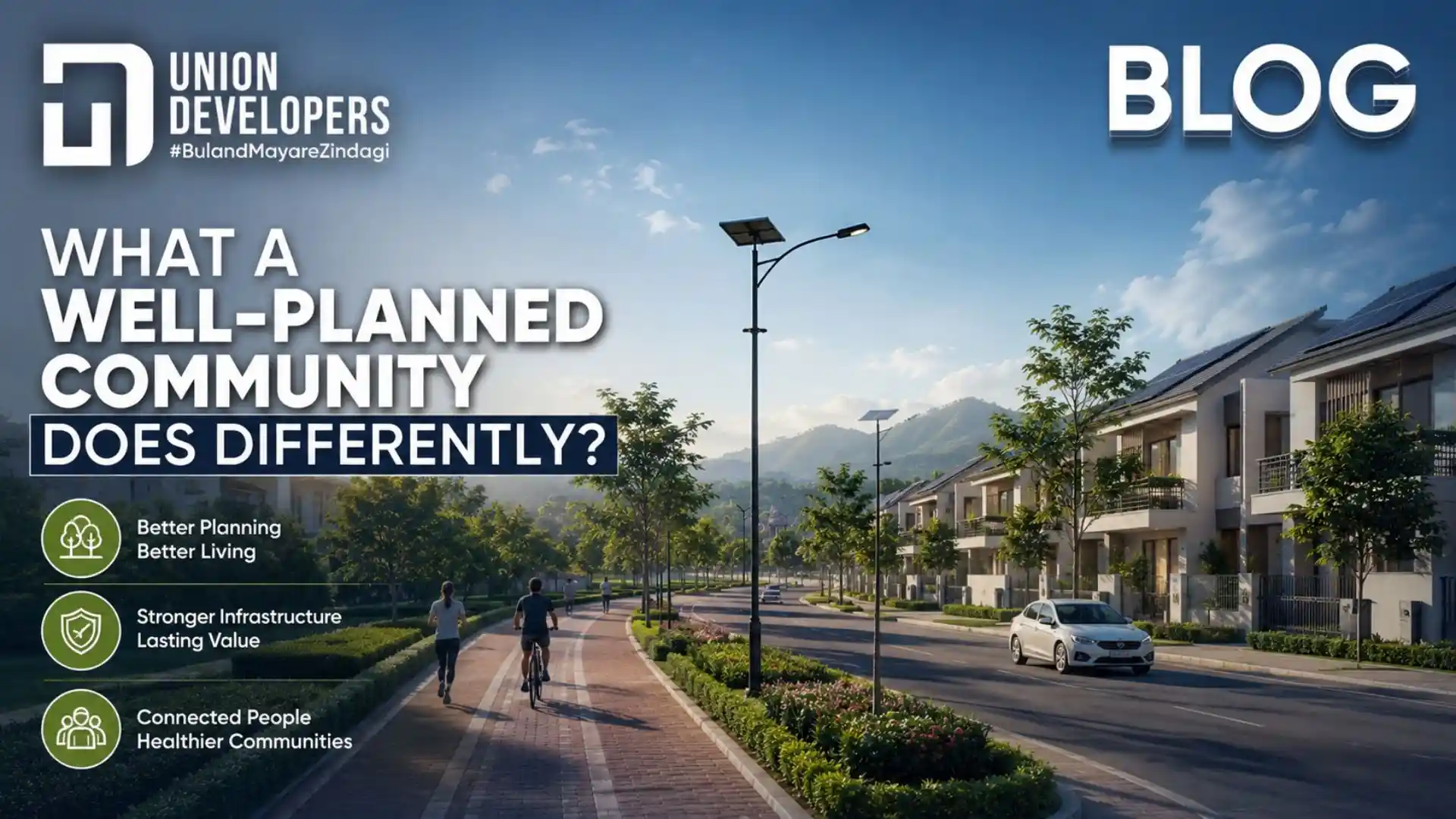
A planned community sorts out drainage, waste, green cover and upkeep at the design stage, before any plot is sold. A weaker scheme patches these in later, once residents start complaining. That early planning is what a buyer is paying the premium for.
Lahore has a few schemes built this way. Union Town, Union Greens Phase I and II, and Union Living set aside green space, plan roads and drainage together, and keep the blocks maintained as they fill out.
For a buyer, the value of that planning is simple to state. A community engineered to stay clean, dry, and green on year ten is far easier to live in, rent out, and sell than one that only performed well on launch day.
The Takeaway for Buyers
In Lahore, two plots at the same price can hold very different futures. The gap is rarely visible in the listing. It sits in the drainage, the waste system, the green cover, and the maintenance discipline of the community around the home.
Judge those before the price, and the price starts to make sense on its own terms. So when you visit a community, take an environmental-quality checklist with you.
An hour spent looking at the actual ground usually tells you more about where the value is heading than the brochure ever will.